

BEEP Green Strategy
At Studio BEEP, we have long strived to act in an environmentally conscious, responsible, and sustainable way toward the environment. Over our 20 years of existence, we have adopted a number of rules and practices that help reduce our carbon footprint within sound postproduction. However, not all of these initiatives were originally motivated purely by environmental concerns—many also stemmed from other goals, such as reducing costs or providing high-quality service, with ecological benefits emerging naturally as part of that process.
Below are some of our specific examples — some small, some cost-free, and others requiring investment. We believe in sharing best practices and mutual inspiration, and we are happy to share our experience:
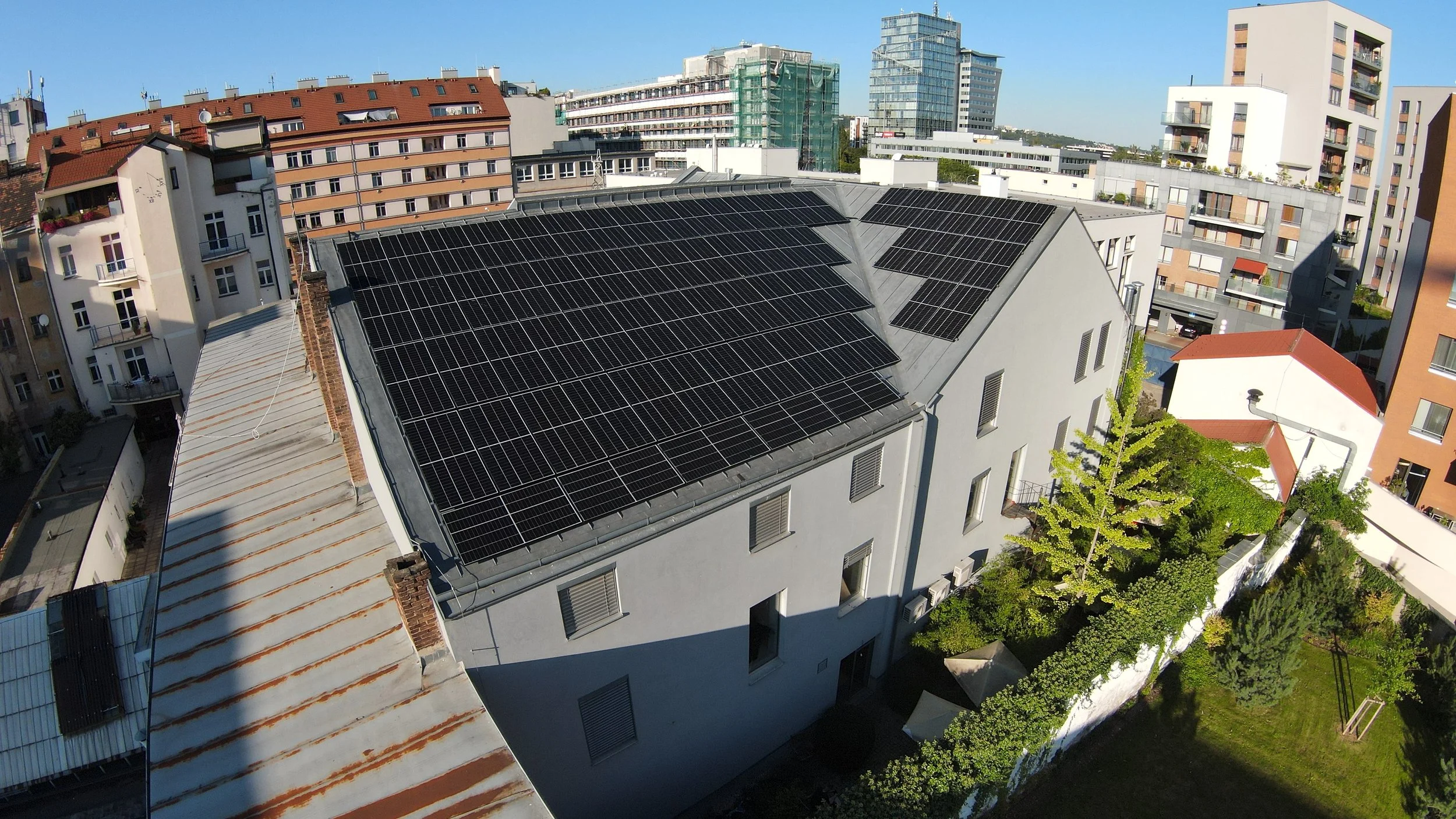
Solar panels and EV charging station – At the end of 2023, we launched our own solar power plant, which now covers 71% of the studio’s electricity consumption.
In the same year, we also installed an electric vehicle charging station.
In 2024, our solar plant produced 47 MWh of electricity — roughly the annual consumption of five households.
The economic payback period for the investment is about 8 years, with a lifespan exceeding 20 years.Rechargeable batteries – On set, we typically use two types of devices: those that can only be powered by batteries (such as wireless transmitters, director’s receivers, and timecode modules), and the recorder operated by the sound engineer.
We always select recorders that can be powered either directly from the electrical grid or with rechargeable batteries, which have a lifespan of several years.
For transmitters, receivers, and timecode modules, we exclusively use rechargeable batteries.During a standard shooting day for a TV series, we typically use 8 transmitters (2 AA batteries each), 5 receivers (2 AA each), and 2 timecode modules (1 AA each).
Batteries in transmitters are changed every 4 hours (3 times per day), while those in receivers and timecode modules last the full 12-hour shift.
That means 60 AA batteries per shooting day, or 1,800 alkaline batteries over 30 days.
With rechargeable batteries, we manage the same 30-day shoot using only 80 batteries.
With two TV series and three films per year (around 150 shooting days total), this saves approximately 9,000 batteries annually.
After a year of intensive use, when the rechargeable batteries’ capacity decreases, we reassign them from set use to less demanding production equipment.
Waste sorting – Naturally, we sort waste (plastic, paper, and Tetra Pak cartons) and use deposit-based packaging wherever possible.
Fresh-ground coffee – We do not use capsules or any pre-portioned coffee. Instead, we buy whole coffee beans — about 380 kg per year!
When translated into capsule equivalents (5.5 g per serving), this saves approximately 69,000 capsules that would otherwise need to be produced.Local catering – For meetings or approval screenings, we use refreshments from a small artisanal bakery located just 100 meters from our studio, offering a wide range of products and always including vegetarian options.
For larger catering needs, we work with nearby local restaurants. We also collaborate with the restaurant located directly in our building — for take-away orders to the studio, we use no packaging material, and our sound engineers, guests, and clients can eat directly from the restaurant’s dishware.Electronic scripts – We try to work with scripts and materials on iPads, which eliminates the need for paper and printing.
This isn’t always possible (for example, during long audiobook recordings), and not every director, sound engineer, or actor prefers this method, but we’re steadily expanding its use.